
Symptoms of RSV in Newborn: 9 Signs & When to Seek Care
November 25, 2026
TL;DR
RSV (respiratory syncytial virus) often starts looking like a common cold but can become serious in newborns within days. In babies under 6 months, the warning signs are sometimes subtle: irritability, poor feeding, and decreased activity, often without fever. Days 3 through 5 are the critical window when symptoms either begin to improve or worsen into breathing difficulty. If your newborn shows labored breathing, wheezing, or pauses in breathing, seek medical care immediately.
What Is RSV?
RSV (respiratory syncytial virus) in newborns often begins with cold-like symptoms, including a runny nose, sneezing, and coughing. However, it can progress into a serious lower respiratory infection, particularly in babies younger than 6 months.
The 9 common symptoms of RSV in newborns include:
Runny nose or nasal congestion
Sneezing
Coughing
Decreased appetite or poor feeding
Irritability or unusual fussiness
Decreased activity or unusual sleepiness
Wheezing
Rapid or labored breathing
Pauses in breathing (apnea)
The most concerning warning signs are difficulty breathing, chest retractions, blue or gray lips or skin, breathing pauses, and difficulty waking. These require immediate medical attention. A newborn younger than 3 months with a temperature of 100.4°F (38°C) or higher also needs urgent medical evaluation.
Unlike older children, newborns with RSV may not develop a fever. Parents should pay close attention to changes in breathing, feeding, and activity rather than relying on temperature alone.
RSV symptoms in newborns can range from mild cold-like symptoms to serious breathing difficulties. Some symptoms appear gradually, while others, particularly in very young infants, can be subtle.
Here are nine signs parents should recognize.
1. Runny Nose or Nasal Congestion
A runny or stuffy nose is often one of the earliest signs of RSV. Your newborn may have clear nasal discharge, noisy breathing through the nose, or difficulty feeding because congestion makes it harder to breathe while nursing or bottle-feeding.
2. Sneezing
Frequent sneezing can occur as RSV irritates the upper respiratory tract. Although sneezing alone does not indicate RSV, it may appear alongside congestion, a runny nose, and coughing.
3. Persistent or Worsening Cough
RSV commonly begins with a mild cough that can become more frequent or intense over the next few days. As the infection affects the lower airways, coughing may occur alongside wheezing or increased breathing effort.
4. Poor Feeding or Decreased Appetite
A newborn with RSV may breastfeed or take a bottle less frequently than usual. Nasal congestion and breathing difficulties can make sucking, swallowing, and breathing at the same time challenging.
Pay attention to how much your baby drinks compared with their normal feeding pattern. Reduced intake can lead to dehydration.
5. Irritability or Unusual Fussiness
Some newborns with RSV become unusually fussy, irritable, or difficult to comfort. This can be an early indication that your baby is feeling unwell, even when obvious respiratory symptoms have not developed.
6. Decreased Activity or Unusual Sleepiness
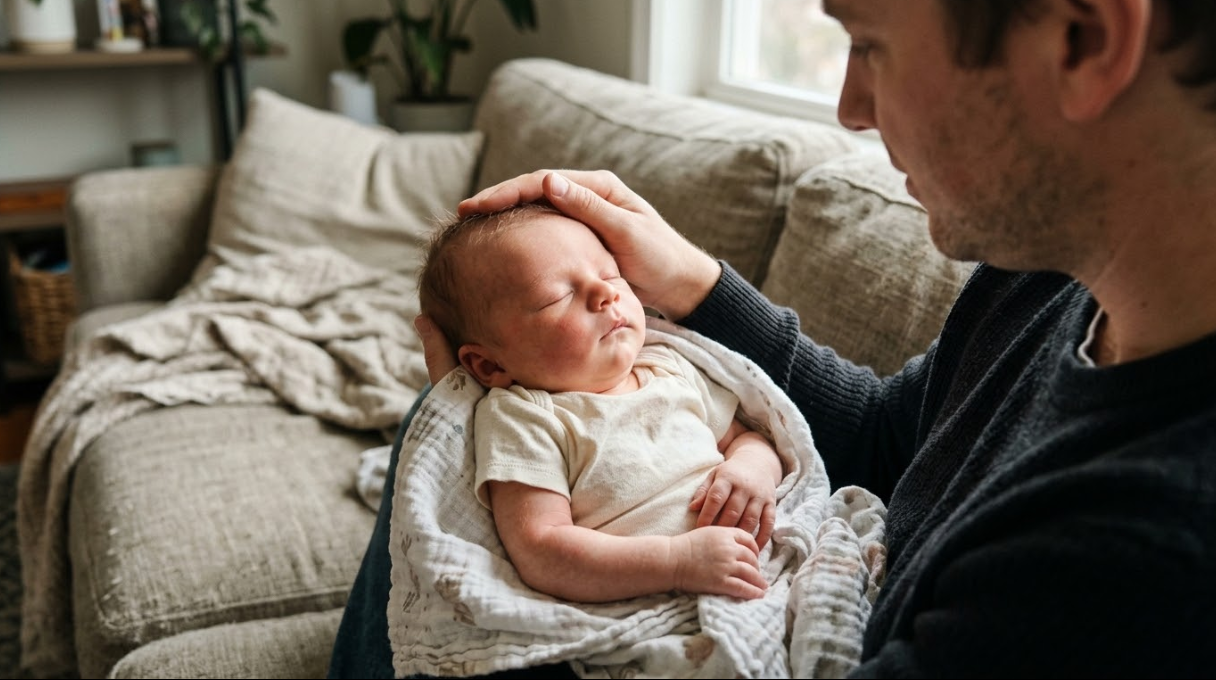
A baby with RSV may become less active, sleep more than usual, or show less interest in interacting. Unusual lethargy, especially when your baby is difficult to wake, requires immediate medical evaluation.
7. Wheezing
Wheezing is a high-pitched whistling sound that may occur when your baby breathes. It can develop when RSV causes inflammation and narrowing of the small airways.
New wheezing in a newborn should be assessed by a healthcare professional promptly, particularly when accompanied by coughing or rapid breathing.
8. Rapid or Labored Breathing
A newborn with worsening RSV may breathe faster or appear to work harder to get air.
Watch for:
Breathing noticeably faster than usual
Nostrils widening with each breath
Skin pulling inward between or beneath the ribs
Head bobbing with each breath
Grunting during breathing
These signs can indicate respiratory distress and require immediate medical attention.
9. Pauses in Breathing (Apnea)
Some very young infants with RSV experience apnea, meaning temporary pauses in breathing. This is particularly concerning in newborns and premature infants.
A pause lasting more than 10 seconds is one recognized sign of apnea in infants with RSV. If your baby stops breathing, turns blue or gray, becomes unresponsive, or has repeated breathing pauses, seek emergency medical assistance immediately.
Important: Your newborn does not need to have all nine symptoms to have RSV. Some babies, particularly those younger than 6 months, may show only irritability, decreased activity, or poor feeding. If you notice concerning changes, contact your baby's healthcare provider rather than waiting for additional symptoms.
What Does Respiratory Distress Look Like in a Newborn?
Respiratory distress occurs when a baby has to work harder than normal to breathe. It is one of the most serious complications parents should watch for when a newborn has RSV.
Unlike a typical stuffy nose, respiratory distress involves visible changes in breathing effort.
Signs of Breathing Difficulty
Chest retractions: The skin between the ribs, beneath the ribcage, or above the breastbone pulls inward with each breath.
Nasal flaring: The nostrils widen noticeably as the baby tries to draw in more air.
Head bobbing: The baby's head moves forward or backward with each breath because of increased breathing effort.
Grunting: A short grunting sound occurs during exhalation as the baby tries to keep the airways open.
Rapid breathing: Your newborn breathes faster than usual, particularly when calm and not crying.
Bluish or gray coloring: The lips, tongue, or skin may appear blue or gray, suggesting inadequate oxygen. This is an emergency warning sign.
How to Count Your Newborn's Breathing Rate
You can observe your baby's breathing by watching the chest or abdomen rise and fall.
Wait until your baby is calm or sleeping.
Watch the chest or belly rise and fall.
Count each complete rise-and-fall cycle as one breath.
Count for a full 60 seconds because newborn breathing can be irregular.
Note the result and share it with your pediatrician if you are concerned.
A newborn's typical respiratory rate is approximately 30 to 60 breaths per minute. A persistently higher rate while calm warrants prompt medical assessment.
Do not wait to finish counting breaths if your baby has chest retractions, blue or gray coloring, breathing pauses, or obvious difficulty breathing. Seek emergency care immediately.
RSV Symptom Timeline: What to Expect Day by Day
RSV symptoms usually appear 4 to 6 days after exposure. The illness often begins with mild cold-like symptoms before potentially progressing into bronchiolitis or pneumonia.
Symptoms commonly become most severe around days 3 through 5, although the timeline varies between babies.
Days 1–2: Early Cold-Like Symptoms
The first signs of RSV often resemble an ordinary cold.
Parents may notice:
Runny or stuffy nose
Sneezing
Mild coughing
Reduced appetite
Occasional irritability
At this stage, some babies may have no fever or only subtle changes in their normal behavior.
Days 3–5: Symptoms May Become More Severe
This is often the most important period for monitoring your newborn.
As RSV affects the lower respiratory tract, symptoms may include:
More frequent or persistent coughing
Wheezing
Rapid or labored breathing
Chest retractions
Difficulty breastfeeding or bottle-feeding
Reduced activity and increased sleepiness
Not every baby experiences worsening symptoms. However, parents should pay particular attention to changes in breathing, feeding, and alertness.
Days 6–8: Symptoms May Begin Improving
Some babies begin showing signs of recovery as the infection runs its course.
You may notice:
Less frequent coughing
Improved feeding
Easier breathing
More normal activity levels
Babies with more severe infections may still require medical treatment or hospitalization during this period.
Days 9–14 and Beyond: Gradual Recovery
Many babies recover within 1 to 2 weeks, although coughing and congestion can sometimes last longer.
Breathing should gradually become easier, and feeding and activity should move toward normal.
If your newborn develops new breathing difficulties, feeds poorly, becomes unusually sleepy, or appears to be getting worse at any point, seek medical advice promptly.
Important: RSV does not follow an identical timeline in every baby. Do not wait until day 3, day 5, or any particular milestone before seeking medical attention for concerning symptoms.
RSV vs. a Common Cold: How to Tell the Difference
This is the question every parent asks: is this just a cold, or is it RSV?
At the start, you often cannot tell. The symptoms overlap almost completely. The difference shows up in the chest over the next few days.
Common Cold |
RSV |
|
|---|---|---|
Where it stays |
Nose and throat |
Moves into the chest and lower airways |
Breathing |
Normal rate and effort |
Increased rate, visible effort, possible wheezing |
Wheezing |
Rare |
Common, and a hallmark symptom |
Cough |
Mild, improving by day 4 to 5 |
Worsens over days 3 to 5 |
Feeding |
Slightly reduced |
Significantly reduced or refused |
Typical course |
Improves within a week |
Worst on days 3 to 5, then gradually improves (1 to 2 weeks total) |
Fever in newborns |
Often present |
Often absent |
The single biggest differentiator is wheezing combined with visible breathing effort. A cold that stays in the nose and throat, with normal breathing, is likely just a cold. A “cold” that moves into the chest with audible wheezing, faster breathing, and retractions is behaving like RSV.
That said, only testing can confirm which virus is responsible. RSV symptoms overlap with flu and COVID-19 too. A 3-in-1 flu and COVID test can help rule those out, while a 4-in-1 test covers RSV as well.
Can RSV Cause Bronchiolitis or Pneumonia in Newborns?
Yes. RSV can cause bronchiolitis and pneumonia, two lower respiratory tract illnesses that can become serious in newborns.
RSV Bronchiolitis
Bronchiolitis occurs when the small airways in the lungs become inflamed and swollen. RSV is one of its most common causes in infants.
Symptoms may include:
Persistent coughing
Wheezing
Rapid breathing
Chest retractions
Difficulty feeding
Increased breathing effort
In severe cases, babies may require hospitalization, oxygen support, or fluids through an IV.
RSV Pneumonia
RSV can also cause pneumonia, an infection involving the lungs.
Possible symptoms include:
Coughing
Fever or unusually low temperature
Rapid or difficult breathing
Poor feeding
Unusual tiredness
Reduced oxygen levels
Pneumonia can be particularly concerning in premature infants and babies with underlying medical conditions.
When Should Parents Be Concerned?
Parents should seek immediate medical attention if their newborn develops difficulty breathing, blue or gray lips or skin, breathing pauses, or unusual unresponsiveness.
Both bronchiolitis and pneumonia require professional medical assessment. Parents should not attempt to diagnose these conditions based on symptoms alone.
When to Call the Doctor vs. When to Go to the ER for Newborn RSV
Knowing when to seek medical care is essential because RSV can worsen over several days, especially in newborns and infants younger than 6 months.
The right response depends on your baby's age, breathing, feeding, alertness, and temperature.
Call Your Pediatrician Promptly If:
Your newborn develops a runny nose, cough, or other respiratory symptoms.
Your baby is feeding noticeably less than usual.
Your baby has fewer wet diapers than normal.
Your baby becomes unusually irritable or less active.
Your baby's cough or congestion is getting worse.
You notice new wheezing, even if your baby does not appear severely distressed.
Newborns, particularly those younger than 3 months, should receive individualized medical guidance when they develop signs of respiratory infection.
Seek Emergency Medical Care Immediately If:
Your baby is struggling to breathe.
You see chest retractions, persistent nasal flaring, or pronounced head bobbing.
Your baby's lips, tongue, or skin appear blue or gray.
Your baby has breathing pauses or stops breathing.
Your baby is difficult to wake or unusually unresponsive.
Your baby cannot feed because of breathing difficulty.
If your baby is not breathing normally, is unresponsive, or has blue or gray coloring, call your local emergency number immediately.
What If Your Newborn Has a Fever?
A rectal temperature of 100.4°F (38°C) or higher in a baby younger than 3 months requires immediate medical evaluation, even if the baby otherwise appears comfortable.
Do not assume that a fever is simply caused by RSV or try to manage it at home without medical guidance.
What If Your Baby Has No Fever?
A normal temperature does not rule out RSV or a serious respiratory infection. Some newborns with RSV develop irritability, decreased activity, poor feeding, or breathing difficulties without a fever.
Remember: Never wait for a fever before seeking help if your newborn shows signs of breathing difficulty or unusual lethargy.
Which Newborns Are at Highest Risk for Severe RSV?
Any newborn can develop a serious RSV infection, but certain babies have a greater risk of complications and hospitalization.
The following factors can increase the risk of severe RSV disease.
Premature Birth
Babies born prematurely may have less-developed lungs and immune systems. This can make it harder for them to manage respiratory infections.
The risk is particularly important for babies born very prematurely or those with ongoing respiratory complications.
Age Under 6 Months
Very young infants are more vulnerable because their airways are small and their immune systems are still developing.
Babies younger than 3 months are particularly concerning because RSV can sometimes cause breathing pauses, poor feeding, and respiratory distress.
Chronic Lung Disease
Infants with bronchopulmonary dysplasia or other chronic lung conditions may have more difficulty recovering from RSV.
Congenital Heart Disease
Certain congenital heart conditions can make it harder for a baby to tolerate the increased demands that respiratory infections place on the heart and lungs.
Weakened Immune System
Babies with immune deficiencies or other conditions that weaken their immune response may be more vulnerable to severe infections.
Does RSV Only Affect High-Risk Babies?
No. Healthy, full-term babies can also develop severe RSV infections.
Being born at full term and having no underlying medical conditions does not eliminate the risk.
Parents should monitor all newborns for changes in breathing, feeding, alertness, and hydration, regardless of birth history.
Who Is Most at Risk?
Certain newborns face higher risk for severe RSV:
Premature infants
Babies under 6 months during RSV season
Infants with congenital heart defects or chronic lung conditions
Babies with weakened immune systems
But here’s a statistic that surprises most parents: 75% of children hospitalized for RSV were born full-term with no underlying health conditions. RSV does not only target high-risk babies. Any newborn can develop severe disease.
Infants between 2 and 6 months of age are at the highest risk for hospitalization, with RSV-associated hospitalization rates reaching 1,116.7 per 100,000 among babies under 12 months.
How RSV Is Diagnosed, Including At-Home Testing
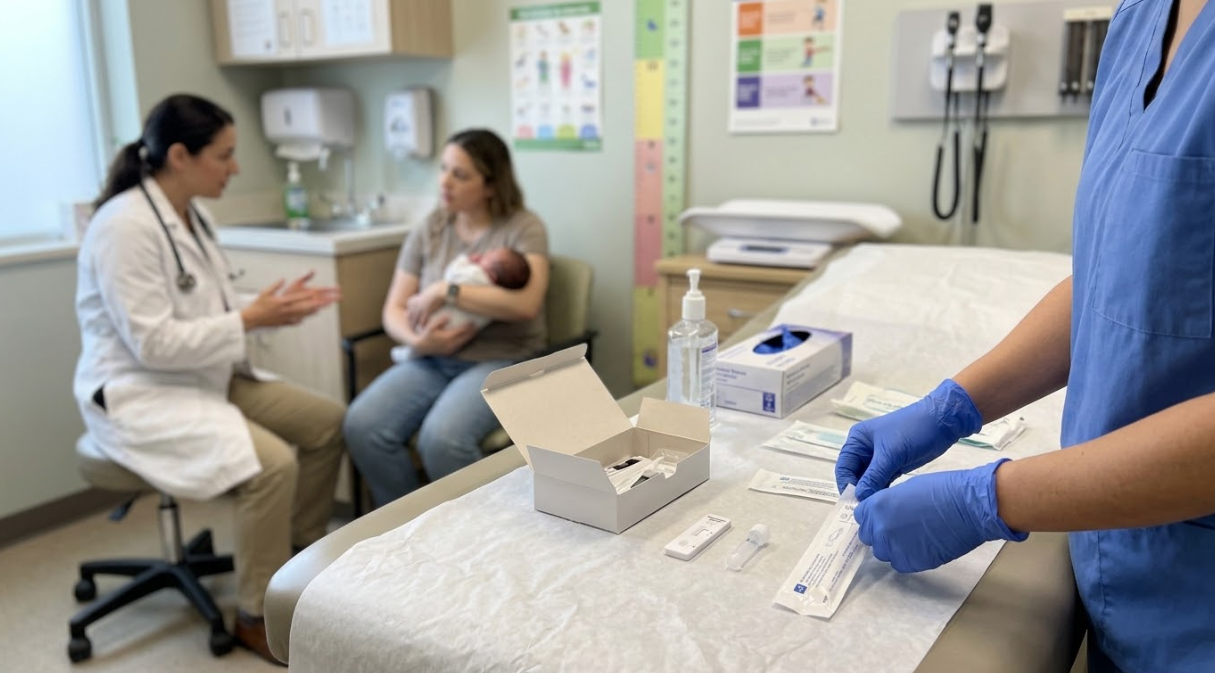
A pediatrician can often suspect RSV based on symptoms, the time of year, and a physical exam. But because RSV symptoms overlap so heavily with other respiratory viruses, testing is the only way to confirm the diagnosis.
In-Clinic Testing
Rapid antigen tests performed in a doctor’s office or hospital are the most common diagnostic method. These tests work particularly well in infants and young children because babies typically have higher viral loads in their respiratory secretions, making detection more reliable.
At-Home Testing
The FDA cleared the first at-home tests that include RSV detection in early 2025. This is a genuine shift for families. Previously, the only way to distinguish RSV from flu or COVID-19 was a clinic visit. Now, multi-pathogen rapid tests can identify which virus is present in about 15 minutes from home.
This matters because the symptoms of RSV in a newborn look nearly identical to flu and COVID-19 in the first few days. Knowing which pathogen you’re dealing with helps you and your pediatrician make better decisions about monitoring, treatment, and when to seek in-person care.
A 4-in-1 rapid test for RSV, flu, and COVID-19 can help identify the responsible virus at home. Practitioners on Reddit note that testing timing matters: testing too early in the illness may produce a false negative, so retesting after a day or two of symptoms can improve accuracy.
Important: an at-home test can help identify which virus may be present, but it does not replace clinical evaluation. If your newborn shows severe symptoms, go directly to the emergency room regardless of test results. A negative rapid test does not rule out infection, particularly very early in the illness.
RSV Season: When to Be Most Vigilant
RSV season in the United States typically runs from October through March, with most activity concentrated between December and February. However, timing varies by region. Florida and the Southeast consistently see RSV activity begin earlier, sometimes as late summer.
The 2025 to 2026 RSV season peaked later than historic seasons, with hospitalizations reaching their highest point in late February rather than the usual late December or early January. The reason for this shift is uncertain. The takeaway for parents: don’t assume RSV season ends in January. Stay alert through early spring.
If your baby is born during or just before RSV season, having testing supplies and monitoring tools on hand is worth considering. A test and thermometer bundle keeps the essentials ready without the stress of a pharmacy run when your baby is already sick.
RSV Prevention for Newborns
Preventing severe RSV disease is especially important during a baby's first months of life. Fortunately, parents now have more options for protecting infants against severe RSV.
1. Maternal RSV Vaccination During Pregnancy
The maternal RSV vaccine, Abrysvo, helps protect babies before birth.
It is administered during weeks 32 through 36 of pregnancy in the United States during the recommended seasonal period. The mother develops antibodies that cross the placenta and provide protection to the baby after birth.
2. Infant RSV Monoclonal Antibodies
Two long-acting monoclonal antibody products are available to help prevent severe RSV disease in infants:
Nirsevimab (Beyfortus): Provides passive protection against RSV and is recommended for eligible infants entering their first RSV season.
Clesrovimab (Enflonsia): Another long-acting monoclonal antibody approved for eligible infants entering their first RSV season.
These products are not traditional vaccines. They provide ready-made antibodies that help protect babies against severe RSV infection.
Do Babies Need Both the Maternal Vaccine and an RSV Antibody?
Most babies do not need both.
Under current CDC recommendations, an infant younger than 8 months entering their first RSV season should generally receive an infant RSV antibody if the mother did not receive the maternal RSV vaccine during pregnancy, the vaccination status is unknown, or the baby was born within 14 days of maternal vaccination.
Additional circumstances may justify an infant antibody even after maternal vaccination, depending on medical assessment.
Parents should discuss the appropriate option with their obstetrician or pediatrician.
Everyday Ways to Reduce RSV Exposure
In addition to immunization, parents can reduce the risk of RSV transmission by:
Washing hands before touching or feeding the baby.
Asking visitors to stay away when they have cold or flu symptoms.
Avoiding close contact with people who are sick.
Cleaning frequently touched household surfaces.
Improving indoor ventilation when practical.
Avoiding crowded indoor environments during periods of high respiratory virus activity.
Keeping the newborn away from people who are coughing or sneezing.
Breastfeeding, when possible, also provides immune protection and supports infant health, although it does not guarantee that a baby will avoid RSV.
Home Care Tips for Newborns With Mild RSV
Most RSV infections are managed with supportive care because there is no routinely recommended antiviral medication that cures an uncomplicated RSV infection.
However, newborns are more vulnerable to respiratory complications than older children. Parents should contact their pediatrician for guidance before managing suspected RSV at home.
If a healthcare professional confirms that home care is appropriate, the following measures may help relieve symptoms.
1. Use Saline Drops and Gentle Nasal Suction
Nasal congestion can make it difficult for a newborn to breathe comfortably while feeding.
Saline drops and a gentle nasal aspirator can help loosen and remove mucus. Consider using them before feeding when congestion interferes with nursing or bottle-feeding.
Avoid aggressive or excessively frequent suctioning because it can irritate the nasal passages.
2. Offer Breast Milk or Formula Frequently
Newborns need adequate fluids to prevent dehydration.
Continue offering breast milk or formula, following your pediatrician's advice. Smaller, more frequent feeds may be easier for some congested babies.
Watch for reduced feeding, fewer wet diapers, or difficulty coordinating sucking and breathing.
3. Keep the Air Comfortable
A clean cool-mist humidifier may help relieve nasal dryness and congestion.
Clean and maintain the humidifier according to the manufacturer's instructions to prevent mold and bacterial growth.
4. Monitor Temperature and Symptoms
Use an appropriate digital thermometer and follow your pediatrician's instructions for measuring your newborn's temperature.
Keep track of:
Feeding frequency and approximate intake
Wet diapers
Coughing and congestion
Breathing effort
Changes in alertness and activity
A temperature of 100.4°F (38°C) or higher in a baby younger than 3 months requires immediate medical evaluation.
5. Follow Safe Sleep Practices
Even when your baby has RSV or nasal congestion, continue following safe sleep recommendations.
Always place your baby on their back on a firm, flat sleep surface. Do not elevate the mattress, use pillows, or allow your baby to sleep in an inclined position to relieve congestion.
6. Avoid Unapproved Medications
Do not give newborns over-the-counter cough and cold medicines unless specifically directed by a qualified healthcare professional.
Never give aspirin to an infant.
Do not use antibiotics unless prescribed for a suspected or confirmed bacterial infection. Antibiotics do not treat RSV itself.
When Home Care Is Not Enough
Home care is appropriate only when a healthcare professional determines that the baby's symptoms can be safely managed outside a medical facility.
Seek emergency care if your newborn develops labored breathing, chest retractions, blue or gray coloring, breathing pauses, or unusual unresponsiveness.
If feeding becomes significantly reduced or symptoms worsen, contact your pediatrician promptly.
A compact thermometer or ear thermometer provides another option for regular temperature checks, which are especially important when fever patterns may be atypical in newborns with RSV.
Most babies with mild RSV start improving after day 5 and recover fully within 1 to 2 weeks. The cough may persist longer than other symptoms, but as long as breathing effort is decreasing and feeding is improving, the trajectory is positive.
FAQ
What are the first signs of RSV in a newborn?
The first signs of RSV in a newborn often include a runny nose, nasal congestion, sneezing, coughing, and decreased appetite. Some babies may initially show only subtle changes, such as irritability, unusual sleepiness, or reduced feeding.
Can a newborn have RSV without a fever?
Yes. Many newborns with RSV do not develop a fever. Babies younger than 6 months may show irritability, decreased activity, poor feeding, or breathing difficulties instead. Parents should not rely on fever alone to identify RSV.
How long does RSV last in newborns?
Most RSV infections improve within 1 to 2 weeks. Symptoms often become most severe around days 3 through 5, although the timeline varies. Coughing and congestion may persist beyond the initial illness.
Is RSV contagious before symptoms appear?
Yes. People with RSV can spread the virus approximately one or two days before developing symptoms. Most people remain contagious for 3 to 8 days, although some infants may spread the virus for longer.
How is RSV different from a common cold in babies?
RSV and common colds can initially cause similar symptoms, including a runny nose, sneezing, and coughing. RSV can progress into the lower airways, causing wheezing, rapid breathing, and respiratory distress. Symptoms alone cannot reliably distinguish RSV from other respiratory infections.
Can a newborn have RSV without coughing?
Yes. Very young infants may initially show irritability, decreased activity, poor feeding, or breathing difficulties without a prominent cough. Any concerning change in a newborn's behavior or breathing deserves medical attention.
When is RSV most dangerous for newborns?
RSV symptoms commonly become most severe around days 3 through 5. However, severe illness can develop at different times. Difficulty breathing, chest retractions, breathing pauses, blue or gray coloring, and unusual unresponsiveness require emergency medical attention.
Can RSV cause breathing pauses in newborns?
Yes. RSV can cause apnea, or pauses in breathing, particularly in very young infants and premature babies. Breathing pauses, especially when accompanied by color changes or unresponsiveness, require emergency medical attention.
Can a newborn recover from RSV at home?
Many babies recover from RSV with supportive care, but a healthcare professional should assess a newborn with suspected RSV and determine whether home care is appropriate. Babies with breathing difficulties, dehydration, or other serious symptoms may need hospitalization.
Can I use an at-home RSV test on my newborn?
Not all at-home RSV tests are authorized for newborns. For example, the iHealth 4-in-1 RSV, flu, and COVID-19 rapid test is intended for adults testing children aged 6 months or older. Always follow the specific product's age restrictions and instructions. Do not delay medical care to perform a home test.
Does RSV only affect premature babies?
No. Full-term babies without underlying medical conditions can also develop severe RSV infections. Premature infants and babies with chronic lung disease, congenital heart conditions, or weakened immune systems have additional risk factors.
Can breastfeeding prevent RSV?
Breast milk provides antibodies and other immune-supporting components that benefit infants. However, breastfeeding does not guarantee protection against RSV. Other preventive measures, including maternal vaccination or infant RSV antibodies when eligible, are also important.
This article is for educational purposes and does not replace professional medical advice, diagnosis, or treatment. If your newborn is showing signs of respiratory distress, contact your pediatrician or seek emergency care immediately.


