
What Is RSV? Symptoms, Treatment & Prevention in 2026
November 25, 2026
TL;DR
Respiratory syncytial virus (RSV) is a common respiratory virus that infects the nose, throat, and lungs. It usually causes mild, cold-like symptoms, but it can lead to serious lung infections such as bronchiolitis and pneumonia, particularly in infants, older adults, and people with weakened immune systems.
RSV spreads through respiratory secretions and contaminated surfaces. Most people recover within one to two weeks, although coughing can last longer. There is no routinely recommended antiviral treatment for uncomplicated RSV, but supportive care, preventive immunizations, and early medical attention for severe symptoms can reduce the risk of complications.
Quick answer: RSV is a contagious respiratory virus that can affect people of all ages. It commonly causes a runny nose, congestion, coughing, and fever, but may cause dangerous breathing problems in high-risk individuals.
RSV at a Glance
Full name: Respiratory syncytial virus (pronounced sin-SISH-ul)
Virus type: RNA virus, Pneumoviridae family, two genotypes (A and B)
Who gets it: Everyone. Most children are infected by age 2, and reinfection happens throughout life.
Peak season: Fall and winter in the U.S., typically peaking in December and January
Typical duration: 1 to 2 weeks, though coughing can linger for several weeks
Contagious period: 3 to 8 days, sometimes up to 4 weeks in infants and immunocompromised individuals
Incubation period: 4 to 6 days
What Does RSV Stand For?
RSV stands for respiratory syncytial virus. The word “syncytial” refers to what the virus does inside the body: it causes infected cells to fuse together, forming large masses called syncytia. Scientists first discovered the virus in 1956, and it has been called a “hidden annual epidemic” because it circulates alongside cold and flu viruses every single year without most people recognizing it.
Despite being one of the most common causes of respiratory illness worldwide, RSV remains surprisingly unfamiliar to many people. A 2025 survey found that only 34.8% of adults who had heard of RSV felt knowledgeable about it. That gap between how widespread RSV is and how little the public understands it is a real problem, especially for parents of young children and adults over 65.
RSV Symptoms
People infected with RSV usually show symptoms within 4 to 6 days of exposure. The symptoms tend to appear in stages rather than all at once.
Common RSV symptoms include:
Runny nose
Nasal congestion
Coughing
Sneezing
Fever
Wheezing
Decreased appetite
RSV Symptoms Day by Day: How the Infection Progresses
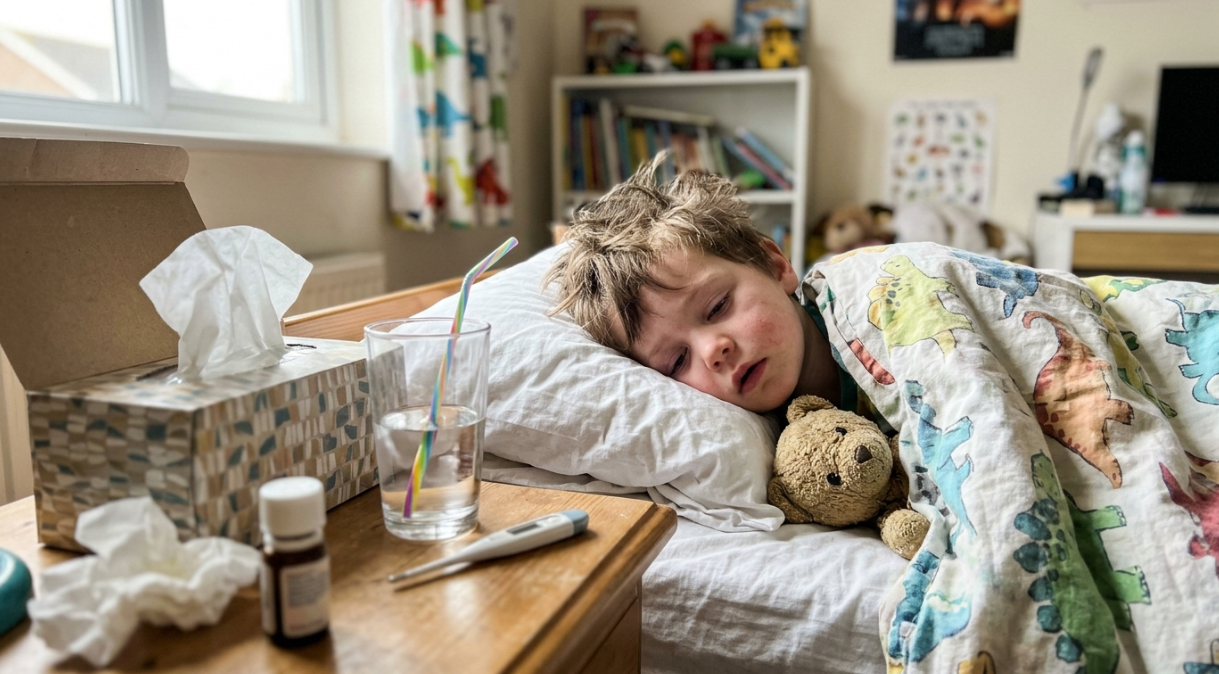
RSV symptoms typically develop gradually after exposure. Most people begin experiencing symptoms within 4 to 6 days, although the incubation period can range from approximately 2 to 8 days.
The infection often starts like a common cold before potentially progressing into the lower respiratory tract.
Typical RSV Symptom Timeline
Stage |
What Usually Happens |
|---|---|
Days 1–2 |
Runny nose, sneezing, congestion, and mild fever may appear. |
Days 3–4 |
Coughing may become more noticeable, with reduced appetite and increased congestion. |
Days 3–5 |
Some people, particularly infants, may develop wheezing or more difficult breathing. |
Days 5–7 |
Symptoms may begin improving, although some people experience worsening respiratory symptoms. |
Days 7–14 |
Most uncomplicated infections gradually resolve. |
After 2 weeks |
A lingering cough may continue even after other symptoms improve. |
When Are RSV Symptoms Usually Worst?
RSV symptoms often become most noticeable around days 3 to 5 after symptoms begin. However, the timing and severity vary between individuals.
Infants and people at higher risk of complications should be monitored closely because breathing difficulties and dehydration can develop as the infection progresses.
Important: This timeline describes a typical pattern, not a predictable schedule. Seek medical attention if breathing becomes difficult, symptoms worsen, or a child shows signs of dehydration.
RSV Symptoms in Infants
Infants are the group most parents worry about, and for good reason. In very young babies, the only symptoms may be irritability, decreased activity, and breathing difficulties. There might be no runny nose or cough at first.
Children’s airways are much smaller than adult airways. When those small passages fill with mucus, babies can deteriorate faster than adults. Parents consistently report a pattern where RSV starts looking like a mild cold, then escalates rapidly: runny nose, worsening cough, difficulty breathing, and then an emergency room visit, sometimes within hours of being cleared by a pediatrician.
If you’re monitoring a sick infant at home, tracking fever with a no-touch forehead thermometer and watching for changes in breathing patterns can help you catch warning signs early.
RSV, Bronchiolitis, and Pneumonia: What's the Difference?
RSV is a virus, while bronchiolitis and pneumonia are respiratory conditions that can develop as complications of an RSV infection.
Understanding the difference helps explain why RSV can be mild in one person but cause serious breathing problems in another.
Condition |
What It Means |
Common Symptoms |
|---|---|---|
RSV infection |
A viral infection affecting the respiratory tract |
Runny nose, congestion, cough, fever, and wheezing |
Bronchiolitis |
Inflammation of the small airways, commonly affecting infants and young children |
Wheezing, rapid breathing, coughing, and difficulty feeding |
Pneumonia |
An infection that inflames the air sacs in one or both lungs |
Fever, cough, rapid breathing, chest discomfort, and difficulty breathing |
Can RSV Turn Into Bronchiolitis?
Yes. RSV is the most common cause of bronchiolitis in infants and young children. The infection can spread into the lower respiratory tract, causing inflammation and swelling in the small airways.
Mucus and inflammation can make it harder for young children to breathe. Some infants may require hospital care, supplemental oxygen, or fluids if they cannot feed adequately.
Can RSV Cause Pneumonia?
Yes. RSV can cause viral pneumonia, particularly in infants, older adults, and people with weakened immune systems or chronic medical conditions.
Not everyone with RSV develops these complications. Most infections remain mild and resolve with supportive care.
RSV Symptoms in Adults
In healthy adults and older children, RSV symptoms are mild and typically mimic the common cold. Most people recover with basic self-care.
But that’s not always the case. RSV in older adults can trigger serious complications. Practitioners on Reddit describe adult RSV as far more debilitating than expected. “Had it for around three or four weeks,” one Reddit user shared. Another said: “I picked up a case of it from my nephew last week, and have lost my voice for several days now.” These accounts match what doctors see clinically: adults often catch RSV from children and then underestimate how long it will take to recover.
When to Seek Emergency Care
Call your doctor or go to the emergency room if you or your child experiences:
Rapid or labored breathing (watch for rib retractions, where the skin pulls in between the ribs)
Bluish color around the lips or fingertips
High fever that doesn’t respond to medication
Significant decrease in wet diapers (in infants, a sign of dehydration)
Extreme lethargy or difficulty waking
Pauses in breathing (apnea)
A pulse oximeter can help you monitor oxygen saturation at home, which is directly relevant when assessing RSV severity. Oxygen levels below 95% generally warrant a call to your healthcare provider.
RSV vs. Flu vs. COVID-19: Symptom Comparison
RSV, influenza, and COVID-19 share many symptoms, including coughing, fever, congestion, and fatigue. However, their typical symptom patterns can differ.
Feature |
RSV |
Influenza (Flu) |
COVID-19 |
|---|---|---|---|
Symptom onset |
Usually gradual |
Often sudden |
Gradual or sudden |
Runny nose |
Common |
Sometimes |
Common |
Cough |
Common |
Common |
Common |
Fever |
Possible |
Common |
Possible |
Wheezing |
More common in infants and young children |
Less typical |
Possible |
Body aches |
Possible |
Often prominent |
Common |
Loss of taste or smell |
Uncommon |
Uncommon |
Can occur |
Breathing complications |
Bronchiolitis and pneumonia |
Pneumonia |
Pneumonia and other complications |
Typical recovery |
1–2 weeks |
Several days to 2 weeks |
Varies by individual |
Can You Tell RSV Apart From the Flu or COVID-19 by Symptoms?
Not reliably. Although RSV, influenza, and COVID-19 can produce different symptom patterns, there is considerable overlap. A diagnostic test is needed to identify the virus with greater certainty.
Testing can be particularly important for infants, older adults, immunocompromised people, and anyone who may qualify for time-sensitive antiviral treatment for influenza or COVID-19.
Test for RSV, flu, and COVID-19 at home with a single nasal swab using a 4-in-1 rapid test that delivers results in approximately 15 minutes.
Who Is at Highest Risk for Severe RSV?
RSV can infect anyone, but severe illness concentrates in specific groups:
Infants under 6 months, especially premature babies
Children under 2 with chronic lung disease or congenital heart conditions
Adults 65 and older, particularly those 75 and above
People with COPD, asthma, or other chronic lung diseases
People with weakened immune systems (from cancer treatment, organ transplant, or other causes)
Adults with congestive heart failure
The numbers tell a stark story. During the 2024-2025 season, RSV was associated with an estimated 190,000 to 350,000 hospitalizations and 10,000 to 23,000 deaths in the United States alone. Hospitalization rates were highest for babies under one year old (1,117 per 100,000) and adults 75 and older (427 per 100,000).
Perhaps most surprising: 82.1% of RSV-associated deaths occurred in adults 65 and older. RSV is not just a pediatric problem. It is a leading cause of death in older adults, and that fact remains underappreciated.
Globally, RSV causes more than 3.6 million hospitalizations and roughly 100,000 deaths in children under five) every year, according to the World Health Organization.
How RSV Spreads
RSV spreads through large respiratory droplets (larger than 5 micrometers) when an infected person coughs, sneezes, or talks. The virus enters through the nose, mouth, or eyes and has an incubation period of 2 to 8 days.
Key transmission facts:
People with RSV are contagious for 3 to 8 days, but some (particularly infants and immunocompromised individuals) can spread the virus for up to 4 weeks.
You can start spreading RSV a day or two before symptoms appear.
RSV can survive for several hours on hard surfaces like doorknobs, countertops, and toys.
Daycare centers and schools are major hotspots because children are in close contact and frequently touch shared surfaces.
This surface survival is one reason RSV moves so efficiently through households. A child brings it home from daycare, and within days the entire family may be infected. Regular handwashing, disinfecting high-touch surfaces, and keeping sick children home are the most practical ways to slow transmission.
How Long Does RSV Last?
Most RSV infections resolve within 1 to 2 weeks. However, the duration depends on the person's age, overall health, and whether complications develop.
A cough may continue for several weeks after other symptoms improve, particularly in young children who develop bronchiolitis.
How Long Does RSV Last in Babies?
Most infants recover from RSV within 1 to 2 weeks, although some experience symptoms for longer.
Parents should pay particular attention to feeding, hydration, and breathing. Infants can become dehydrated if congestion makes feeding difficult or if they are breathing too rapidly to drink normally.
How Long Does RSV Last in Adults?
Healthy adults generally experience mild RSV symptoms that improve within 1 to 2 weeks. Older adults and people with chronic lung or heart conditions may experience more severe illness or a longer recovery.
How Long Is RSV Contagious?
Most people with RSV can spread the virus for approximately 3 to 8 days. However, infants and people with weakened immune systems may remain contagious for up to 4 weeks or longer in some cases.
When Can You Return to Work, School, or Daycare?
There is no single return date that applies to everyone with RSV. In general, people should stay home while they are acutely ill and follow local public health and workplace or school policies.
A practical approach is to resume normal activities when symptoms are improving overall and the person has been fever-free for at least 24 hours without fever-reducing medication, while continuing precautions around vulnerable people.
Young children should also be well enough to participate in normal activities and able to manage their respiratory secretions safely.
Important: People may still spread RSV after they start feeling better. Continue handwashing, covering coughs, and avoiding close contact with high-risk individuals.
RSV Testing: How to Know if It’s RSV
Clinical Testing
In healthcare settings, RSV is typically diagnosed through a nasal swab. The sample can be analyzed via rapid antigen testing or PCR (polymerase chain reaction), which is more sensitive but takes longer to return results.
Here’s the problem: RSV testing in adults is still uncommon. The percentage of acute respiratory infections tested for RSV increased from just 1.3% in 2016-17 to 5.9% in 2022-23, which means the vast majority of adult RSV cases go undiagnosed. Many doctors simply don’t test for it unless the patient is an infant or is seriously ill.
At-Home RSV Testing
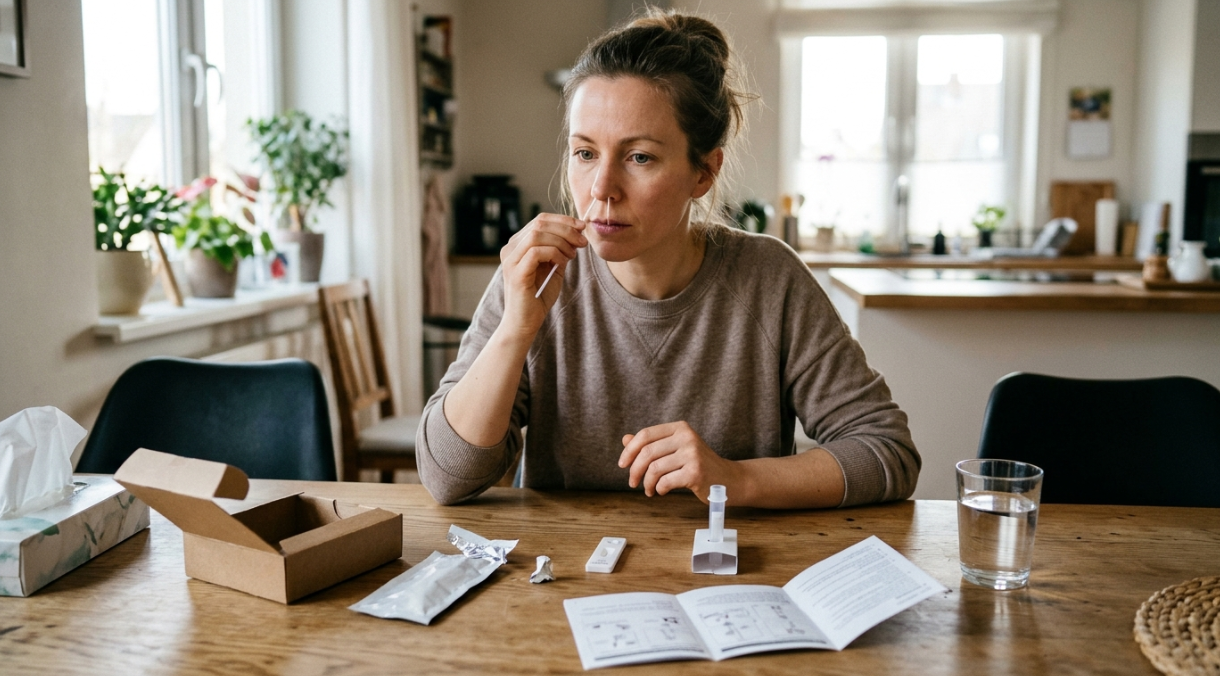
At-home rapid testing for RSV is relatively new. Combination tests that check for RSV, flu A, flu B, and COVID-19 from a single nasal swab are now available, making it possible to identify which virus is causing your symptoms without a clinic visit. iHealth offers an RSV/Flu A&B/COVID-19 4-in-1 rapid test as well as a 3-in-1 flu and COVID home test for households that want multi-pathogen testing options.
When to Test and Accuracy Considerations
Timing matters. RSV test samples should be collected during the first 1 to 3 days after symptoms begin, when viral levels are highest. A systematic review found that rapid antigen tests for RSV demonstrate pooled sensitivity of about 80% and specificity of 97%. That means false negatives are possible, especially if you test too late in the illness or if the infected person is an older child or adult with lower viral loads.
Antigen-based testing is most sensitive for detecting RSV in young children. In older children and adults, a negative rapid test doesn’t definitively rule out RSV, particularly beyond the first few days of symptoms.
Why Testing Matters
Knowing which virus you’re dealing with changes your approach. It helps you decide whether to seek medical attention, guides treatment decisions, and, critically, tells you whether you need to isolate from vulnerable family members like newborns or elderly relatives. Testing also reduces unnecessary antibiotic prescriptions, since RSV, flu, and COVID are all viral infections.
RSV Treatment
There is no antiviral medication for routine RSV infections. Treatment is supportive, focused on managing symptoms while the body fights off the virus.
At-Home Care
Stay hydrated. Small, frequent sips of water, breast milk, or formula for infants.
Manage fever. Acetaminophen or ibuprofen (not aspirin for children) as directed. A forehead thermometer makes it easy to check temperature frequently without disturbing a sleeping child.
Nasal suctioning. For infants who can’t blow their noses, a bulb syringe or nasal aspirator helps clear congestion before feeding and sleeping.
Use a cool-mist humidifier. Moist air can ease breathing.
Monitor breathing. Watch for worsening wheezing, rapid breathing, or retractions.
When Hospitalization Is Needed
Severe RSV cases, particularly in infants and older adults, may require hospitalization for supplemental oxygen, IV fluids, or mechanical ventilation. RSV is the most common viral cause of bronchiolitis (inflammation of the small airways in the lungs) and can also cause pneumonia.
RSV infections in adults can trigger acute myocardial infarction, stroke, and exacerbations of asthma and COPD, making it especially important for older adults to take respiratory symptoms seriously rather than dismissing them as “just a cold.”
RSV Prevention and Vaccines
Preventing RSV involves reducing exposure to the virus and using recommended immunization products to protect people at higher risk of severe illness.
While handwashing and avoiding close contact with sick people can reduce transmission, RSV vaccines and long-acting monoclonal antibodies provide additional protection against severe disease in eligible populations.
Everyday Ways to Prevent RSV
The following measures can help reduce the spread of RSV:
Wash hands regularly with soap and water for at least 20 seconds.
Avoid touching your eyes, nose, and mouth with unwashed hands.
Cover coughs and sneezes with a tissue or your elbow.
Clean frequently touched surfaces, including toys, countertops, and door handles.
Avoid close contact with people who have respiratory symptoms.
Stay home when sick and limit contact with infants and older adults.
Improve indoor ventilation when possible.
Avoid exposing infants to cigarette smoke and other respiratory irritants.
RSV Immunization for Infants
Infants are particularly vulnerable to severe RSV because their airways and immune systems are still developing.
In the United States, the CDC recommends protecting eligible infants through one of two approaches:
1. Maternal RSV vaccination
Pregnant individuals can receive Pfizer's Abrysvo RSV vaccine during weeks 32 through 36 of pregnancy. In most of the continental United States, vaccination is recommended between September and January.
The mother produces antibodies that cross the placenta and help protect the baby during the first months of life.
2. Infant RSV monoclonal antibody
Babies can receive a long-acting RSV antibody after birth. Available options include:
Nirsevimab (Beyfortus)
Clesrovimab (Enflonsia)
These products provide antibodies directly to the infant, helping prevent severe RSV disease and hospitalization.
Most infants do not need both maternal vaccination and an infant RSV antibody. Some older infants and young children with specific risk factors may also qualify for additional protection.
RSV Vaccines for Pregnant Individuals
The maternal RSV vaccine, Abrysvo, helps protect newborns by transferring protective antibodies from the pregnant individual to the baby before birth.
In the United States, the CDC recommends one dose during weeks 32 through 36 of pregnancy, generally between September and January.
The appropriate timing may differ in tropical climates and locations where RSV seasonality does not follow the typical U.S. pattern.
Pregnant individuals should discuss eligibility and timing with their healthcare provider.
RSV Vaccines for Adults
The CDC recommends one dose of an RSV vaccine for:
All adults ages 75 and older.
Adults ages 50–74 who have an increased risk of severe RSV illness.
Risk factors include chronic heart or lung disease, weakened immune systems, certain kidney conditions, and other qualifying medical conditions.
Three FDA-licensed RSV vaccines are recommended for eligible adults:
Arexvy (GSK)
Abrysvo (Pfizer)
mResvia (Moderna)
The RSV vaccine is currently a single-dose recommendation, not an annual vaccination. Adults who have already received an RSV vaccine generally do not need another dose at this time.
How Effective Are RSV Immunizations?
RSV immunization products reduce the risk of severe RSV illness and hospitalization, particularly among infants.
Maternal vaccination and infant monoclonal antibodies provide different routes of protection. Both approaches are designed to protect babies during the period when they are most vulnerable to severe RSV disease.
For adults, RSV vaccines help reduce the risk of severe lower respiratory tract disease and hospitalization.
Important: RSV immunizations do not guarantee that someone will never become infected. Their primary purpose is to reduce the risk of severe disease and its complications.
People should consult a healthcare professional for recommendations based on their age, medical history, pregnancy status, and local immunization guidelines.
RSV Prevention vs. RSV Treatment: What's the Difference?
RSV prevention and treatment serve different purposes. Immunizations help reduce the risk of severe infection before or during exposure, while treatment focuses on managing symptoms after someone becomes infected.
Approach |
Purpose |
Examples |
|---|---|---|
Everyday prevention |
Reduce exposure and transmission |
Handwashing, cleaning surfaces, avoiding sick contacts |
Maternal RSV vaccination |
Protect newborns before birth |
Abrysvo during the recommended pregnancy window |
Infant RSV antibodies |
Reduce the risk of severe RSV in babies |
Nirsevimab and clesrovimab |
Adult RSV vaccination |
Reduce severe illness in eligible adults |
Arexvy, Abrysvo, and mResvia |
Supportive treatment |
Relieve symptoms during infection |
Hydration, fever management, nasal suctioning |
Hospital treatment |
Support people with severe illness |
Oxygen, IV fluids, and respiratory support |
An RSV vaccine or antibody is not a cure for an active RSV infection. Similarly, supportive treatment can help someone recover but does not provide lasting protection against future infections.
Long-Term Effects of RSV
RSV isn’t always a one-and-done illness, particularly for children who experience severe infections early in life. Increasing evidence links early RSV infection to long-term respiratory problems. Several birth cohort studies found that roughly one-third of children who had RSV went on to develop recurrent wheezing and asthma.
This doesn’t mean every child who gets RSV will develop asthma. But children who were hospitalized for RSV or had bronchiolitis as infants should be monitored for respiratory symptoms as they grow. If your child had a severe RSV infection, mention it to their pediatrician at future well-child visits.
RSV in Adults: An Underrecognized Problem
Most articles about RSV focus on babies. That focus is warranted, but it creates a blind spot. RSV remains significantly underdiagnosed in adults because of clinical overlap with other respiratory infections and the absence of routine RSV testing in most healthcare settings.
For older adults especially, RSV is a frequent cause of severe respiratory illness that is likely underdetected. The 2024-2025 season data underscores this: RSV was associated with an estimated 3.6 to 6.5 million outpatient visits across all age groups, and the overwhelming majority of deaths occurred in adults over 65.
RSV activity was also notably disrupted during the COVID-19 pandemic, leading to atypical transmission patterns, delayed peaks, and increased viral activity outside the traditional fall-winter season. The virus doesn’t always follow the calendar the way it used to.
If you’re an adult experiencing a stubborn cough, wheezing, and congestion that feels worse than a typical cold, consider testing for RSV rather than assuming it will pass on its own. This is especially important if you have close contact with infants or elderly family members.
Prepare your household for respiratory season with a 4-in-1 test and thermometer family pack that covers the whole family.
Frequently Asked Questions
Can adults get RSV?
Yes. Adults get RSV frequently, sometimes multiple times in a single year. Most cases are mild, but RSV can cause serious illness in adults 65 and older or those with chronic heart or lung conditions. The problem is that adult RSV is rarely tested for, so most cases are never formally diagnosed.
How long is RSV contagious?
People with RSV are typically contagious for 3 to 8 days. However, infants and immunocompromised individuals can shed the virus for up to 4 weeks. You can also start spreading RSV 1 to 2 days before symptoms appear, which makes containment difficult.
Can you get RSV more than once?
Absolutely. RSV does not produce lasting immunity. Reinfection is common throughout life. Subsequent infections tend to be milder in healthy adults, but they can still be significant in high-risk individuals.
Is there an at-home test for RSV?
Yes. At-home combination tests that detect RSV alongside flu A, flu B, and COVID-19 from a single nasal swab are now available. These 4-in-1 rapid tests produce results in approximately 15 minutes. For best accuracy, test within the first 1 to 3 days of symptom onset.
When should I take my child to the ER for RSV?
Seek emergency care if your child is breathing rapidly, has visible rib retractions, shows a bluish tint around the lips, refuses to drink fluids, has significantly fewer wet diapers than normal, or is unusually lethargic. In very young infants, pauses in breathing (apnea) are a medical emergency.
How is RSV different from a cold?
RSV is actually one of the many viruses that can cause what we call “the common cold.” The difference is that RSV is more likely to move into the lower respiratory tract, causing bronchiolitis or pneumonia, particularly in infants and older adults. A typical cold virus stays in the nose and throat. RSV can go deeper.
Is there a vaccine for RSV?
Yes. RSV vaccines are now available for adults 75 and older (and high-risk adults 60 to 74), as well as a maternal vaccine given during pregnancy to protect newborns. Infants can also receive a monoclonal antibody called Beyfortus. These immunizations have already reduced infant RSV hospitalizations by up to 43%.
Does RSV cause long-term health problems?
It can. Research shows that approximately one-third of children who had RSV develop recurrent wheezing or asthma later in childhood. In older adults, severe RSV infections can worsen existing heart and lung conditions. Most healthy people recover completely, but monitoring is recommended for those who experienced severe illness.


